What Your OB Might Not Fully Explain About Inductions (From an L&D Nurse)
If you’ve been told you may need an induction, this L&D nurse shares what your OB might not fully explain, what to expect, and the key questions to ask before making a decision.
4/20/20263 min read
What Your OB Might Not Fully Explain About Inductions (From an L&D Nurse)
This post may contain affiliate links. As an Amazon Associate, I earn from qualifying purchases.
This content is for informational purposes only and is not medical advice. Always consult your healthcare provider.
No one really explains inductions the way they should.
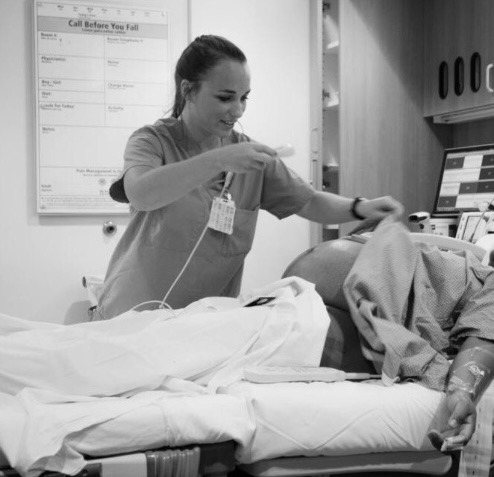
As a Labor & Delivery nurse of 11+ years, I’ve seen what actually happens behind the scenes—and it’s often very different from what moms expect walking in.
Most women are told:
“You’re being induced.”
But what they’re not told is:
how long it can actually take
what decisions you’ll be asked to make along the way
and how quickly things can change if your body (or baby) doesn’t respond
And that’s where so many moms feel caught off guard.
So before you say yes to an induction—or if you already have one scheduled—here’s what I want you to know.
WHAT AN INDUCTION REALLY IS
An induction means your body isn’t in labor yet… so we’re using medical methods to start labor.
But here’s the part most people don’t realize:
👉 It’s not one step.
👉 It’s a process.
And depending on your body, it can take:
several hours
or even 1–2+ days to fully progress (especially if your cervix isn’t ready)
WHAT YOUR OB MIGHT NOT FULLY EXPLAIN
1. It can take WAY longer than you expect
If your cervix isn’t dilated or “favorable,” your induction usually starts with cervical ripening—and this part alone can take a full day or more.
Many moms expect:
“I’ll go in and have a baby that day.”
But in reality, it’s often a slow build.
2. Induction can feel more intense
Because medications are used to stimulate contractions, they can come on:
stronger
closer together
with less time to adjust
Some women describe it as more intense than spontaneous labor.
3. It often becomes a “chain of decisions”
This is the part no one talks about enough.
Once an induction starts, you may be faced with decisions like:
increasing medications
breaking your water
continuous monitoring
pain management options
or what to do if progress slows
👉 And each decision can influence the next.
4. Not every induction goes as planned
Sometimes your body responds beautifully.
Sometimes it doesn’t.
If labor doesn’t progress after enough time, a C-section may be recommended.
And this is where I see moms feel the most overwhelmed—
because they didn’t realize how many “what ifs” were involved.
WHAT YOU CAN CONTROL
This is where most moms feel caught off guard—because no one gives you a script for these decisions in real time.
So I put everything I’ve seen (after 11+ years in L&D) into one place—so you’re not trying to figure it out while you’re in labor.
✨ Grab my Induction + C-Section Bundle here
Even if you can’t control why you’re being induced…
You can absolutely control:
the questions you ask
the pace of decisions
how informed you feel in the moment
And that changes everything.
QUESTIONS I’D ASK (AS AN L&D NURSE)
If your provider recommends an induction, I want you thinking:
What’s the medical reason for this right now?
Is my baby showing signs of distress—or is this preventative?
How urgent is this decision?
What are my options if I wait?
What happens if my body doesn’t respond?
Because informed moms make confident decisions—not rushed ones.
WHERE MOST MOMS FEEL UNPREPARED
It’s not the induction itself.
It’s:
the unexpected timeline
the pressure to decide quickly
and not knowing what questions to ask in the moment
That’s what leads to fear, confusion, and feeling like things are happening to you instead of with you.
👇 THIS IS EXACTLY WHY I CREATED THIS
If you want to feel calm, prepared, and confident walking into your induction…
I put everything I wish every mom knew into one place:
✨ My Induction + C-Section Conversation Bundle
Inside, you’ll get:
✔️ The exact questions to ask before saying yes
✔️ What your OB might not fully explain (broken down simply)
✔️ How to advocate for yourself during labor
✔️ Real scenarios I’ve seen after 11 years as an L&D nurse
Because this isn’t about scaring you.
It’s about making sure you walk in informed, prepared, and in control.
👉 Have this printed for you next OB appointment
At the end of the day, this isn’t about being “for” or “against” induction.
It’s about walking into your birth feeling informed, confident, and able to advocate for yourself—no matter how things unfold.
Because things can change quickly in labor.
And when they do, you deserve to understand your options—not feel rushed into decisions.
If you want to feel fully prepared before your induction (and know exactly what to say if a C-section gets brought up), I created something for you.
✨ My Induction + C-Section Conversation Bundle walks you through:
what to expect step-by-step
the exact questions to ask your provider
how to advocate for yourself in real-time
and the scenarios most moms aren’t prepared for
Because confidence in labor doesn’t come from guessing.
It comes from knowing.
FINAL THOUGHT
Inductions aren’t bad.
They can be necessary, helpful, and even life-saving.
But the difference between a calm, confident birth and an overwhelming one…
Is knowing what to expect before you’re in it.
ldnurseguide
Real-life pregnancy, postpartum, and newborn essentials from a Labor & Delivery nurse + mom of two.
Contact
From an L&D nurse of 11+ years—what I’d ask my OB.
Use this checklist to feel confident advocating for yourself during pregnancy and labor.
ldnurseguide@yahoo.com
© 2026 ldnurseguide. All rights are reserved.
Affiliate Disclosure